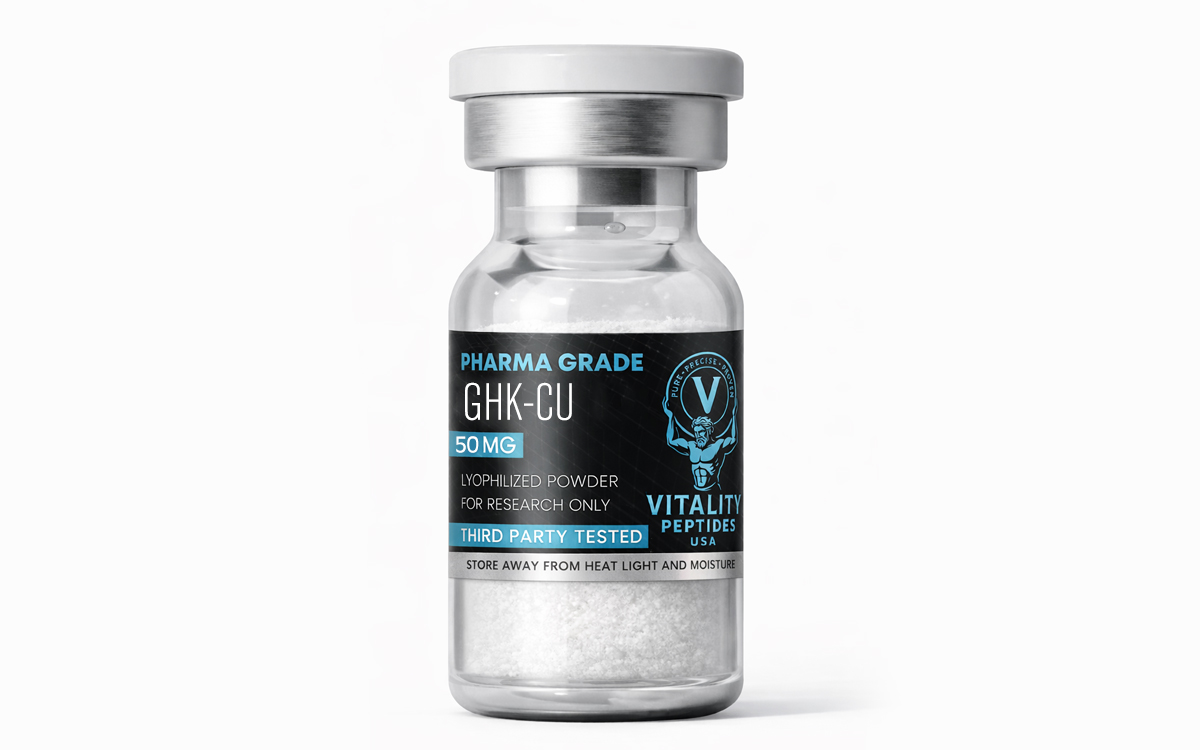
GHK‑Cu (glycyl‑L‑histidyl‑L‑lysine copper) is a naturally occurring copper‑binding peptide that has been widely studied in laboratory settings for its potential role in cellular signaling, tissue response, and regenerative pathways. It is classified as a tripeptide, meaning it is made of three amino acids, and it forms a complex with copper ions — a key trace element involved in many biological processes.
Researchers first identified GHK in human plasma and later observed that it can bind copper and help transport it within biological systems. Because copper plays a role in enzyme activity and cellular repair functions, GHK‑Cu has become a subject of ongoing preclinical investigation.
Why Researchers Study GHK‑Cu
In experimental and preclinical models, GHK‑Cu has been examined for how it interacts with cellular communication and gene signaling pathways. Scientists are particularly interested in how peptide‑copper complexes may influence tissue remodeling and biochemical repair responses.
Some active research areas include:
- Cell signaling pathways related to tissue remodeling and extracellular matrix activity
- Gene expression patterns associated with repair and regenerative responses
- Protein and enzyme regulation involving copper‑dependent systems
- Oxidative stress response mechanisms in controlled lab models
While these areas are promising from a research standpoint, outcomes observed in laboratory environments are not the same as proven clinical effects in humans.
How GHK‑Cu Functions in Research Models (Simplified)
Below is a simple concept diagram showing how GHK‑Cu is generally understood to function in experimental systems:
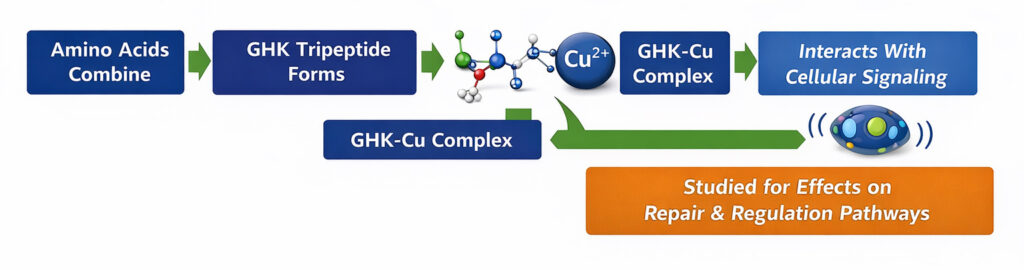
This diagram is a simplified overview used for educational purposes. Actual biochemical interactions are more complex and involve multiple regulatory steps and feedback systems.
Key Structural Concept
GHK‑Cu is made from three amino acids:
- Glycine (G)
- Histidine (H)
- Lysine (K)
When bound with copper, the resulting complex can participate in copper transport and signaling interactions in research models. Because copper is required for several enzyme systems, scientists study how peptide carriers like GHK influence availability and targeting within tissues.
Important Research Context
Most findings related to GHK‑Cu come from in vitro (cell culture) and preclinical studies. These controlled environments help researchers understand mechanisms and generate hypotheses, but they are not substitutes for large, controlled human trials. Interpretation should remain within a research framework.
Proper sourcing, documentation, and laboratory handling standards are essential when working with any peptide compound to maintain data integrity and safety compliance.
For research use only. Not for human consumption or for medical, diagnostic, or therapeutic purposes.
Shop DHK-Cu!
A research peptide explored for tissue repair and cellular support.