
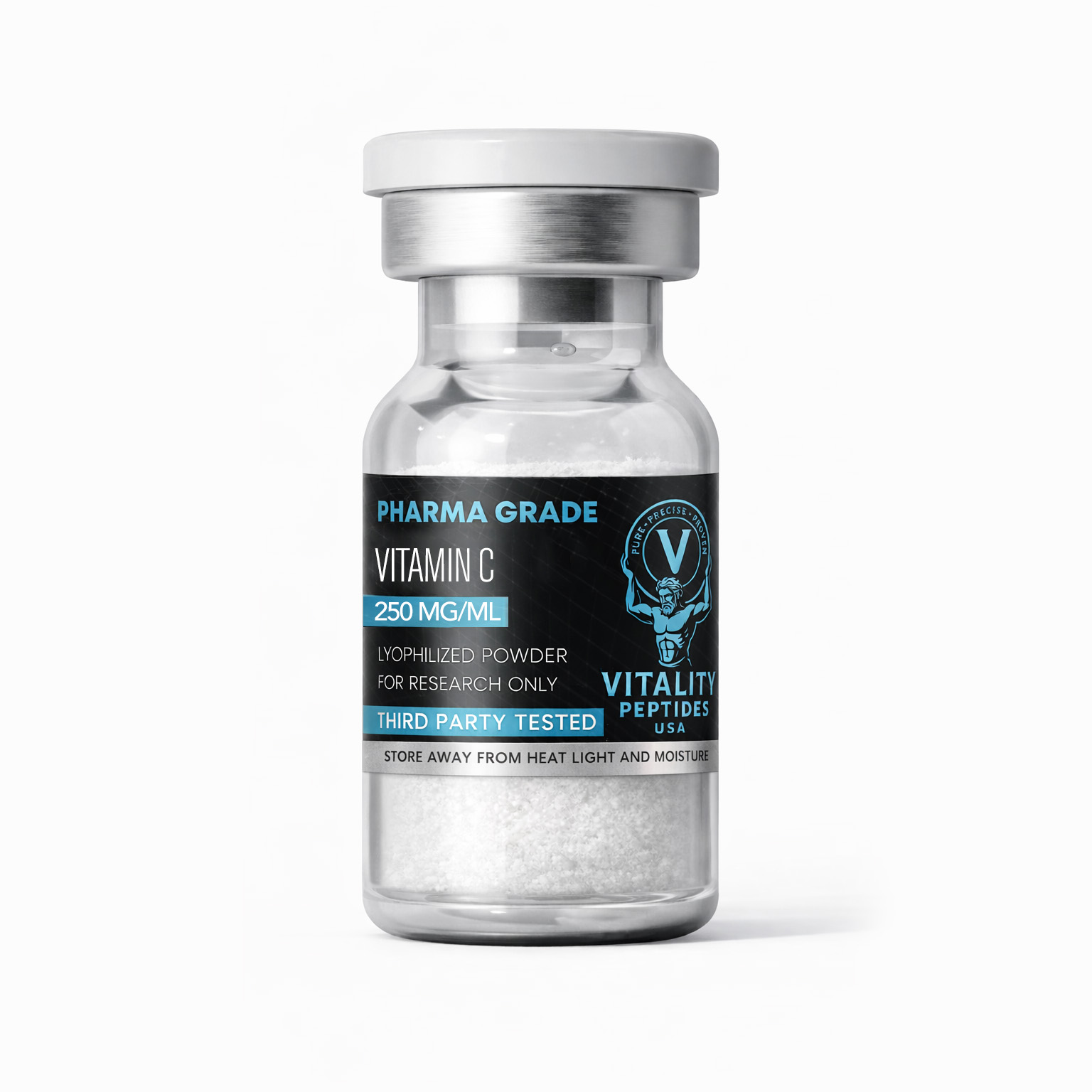
Vitamin C
$50.00
Vitamin C (ascorbic acid) is a water-soluble antioxidant extensively studied for its role in redox homeostasis, collagen biosynthesis, and cellular protection against oxidative damage. It functions as a critical enzymatic cofactor, particularly in hydroxylation reactions and immune-related pathways. In in vitro research settings, Vitamin C is commonly used to investigate oxidative stress regulation, iron metabolism, and signaling mechanisms involved in tissue repair and regeneration.
For in-vitro laboratory research only. Not a drug, food, cosmetic, or veterinary product. Not for human or animal administration.
Frequently Bought Together
PRODUCT FAQ
What is Vitamin C used for in laboratory research?
Vitamin C is commonly used to study oxidative stress regulation, collagen synthesis pathways, redox balance, and cellular protection mechanisms in controlled research models.
Why is Vitamin C important in redox studies?
As a potent reducing agent, Vitamin C helps researchers examine electron transfer processes, antioxidant defense systems, and cellular responses to oxidative stress.
How should Vitamin C solutions be prepared for experiments?
Researchers typically dissolve Vitamin C in appropriate aqueous buffers and prepare fresh solutions when possible to minimize degradation from oxidation.
What research models commonly use Vitamin C?
Vitamin C is widely used in cell culture, biochemical assays, oxidative stress models, and studies involving collagen formation and iron metabolism.
What handling practices help maintain Vitamin C stability?
Protect from light and air exposure, keep containers tightly sealed, store under recommended temperatures, and avoid prolonged solution storage.
Related products
-
Power Blitz
$90.00 Select options This product has multiple variants. The options may be chosen on the product page -
Vitality Vibe
$50.00 Select options This product has multiple variants. The options may be chosen on the product page -
Morning Relax
$65.00 Select options This product has multiple variants. The options may be chosen on the product page -
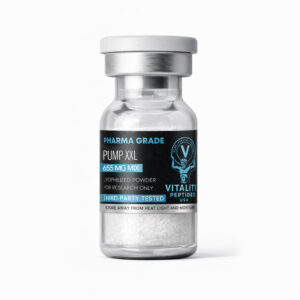
Pump XXL
$60.00 Select options This product has multiple variants. The options may be chosen on the product page